Vertical Transport Injury Counsel

Equipment

Dumbwaiter Accidents: What They Are, How They Happen, and What Injured People Face

Last updated

Free Case Evaluation
Short answer

How dumbwaiter accidents happen, from shear points and misleveling to failed interlocks, the injuries involved, the records that matter, and who may be responsible.

On this page
  1. What a Dumbwaiter Is and How It Differs from a Passenger Elevator
  2. Where Dumbwaiters Are Found and Who Uses Them
  3. How Dumbwaiter Accidents Happen
  4. Locations Where Dumbwaiter Injuries Occur Most Often
  5. Failure Mechanisms: What Can Go Wrong with a Dumbwaiter
  6. Maintenance and Inspection: What the Records Show and Why They Matter
  7. Injuries Associated with Dumbwaiter Accidents
  8. What Evidence Tends to Matter After a Dumbwaiter Injury
  9. Who May Be Responsible for a Dumbwaiter Injury
  10. Frequently asked questions
  11. Sources

A dumbwaiter accident is an injury or death caused by a small lift built to carry goods, not people, between floors. A hand caught at a door, a fall into the open shaft or a car that moves without warning are common examples. These claims usually turn on premises liability, product liability or a maintenance contractor's negligence, under the law of the state where it happened.

If you were hurt by a dumbwaiter, you may be dealing with an injury to your hand or arm, time away from work, and questions about why a piece of kitchen or service equipment could do this much harm. If someone in your family died, you are grieving and may know almost nothing yet about what failed. Most people facing a dumbwaiter injury have never thought about who services the lift behind the wall or who built it. This page explains how these accidents happen, what the records can show, the injuries involved and who may be responsible.

What a Dumbwaiter Is and How It Differs from a Passenger Elevator

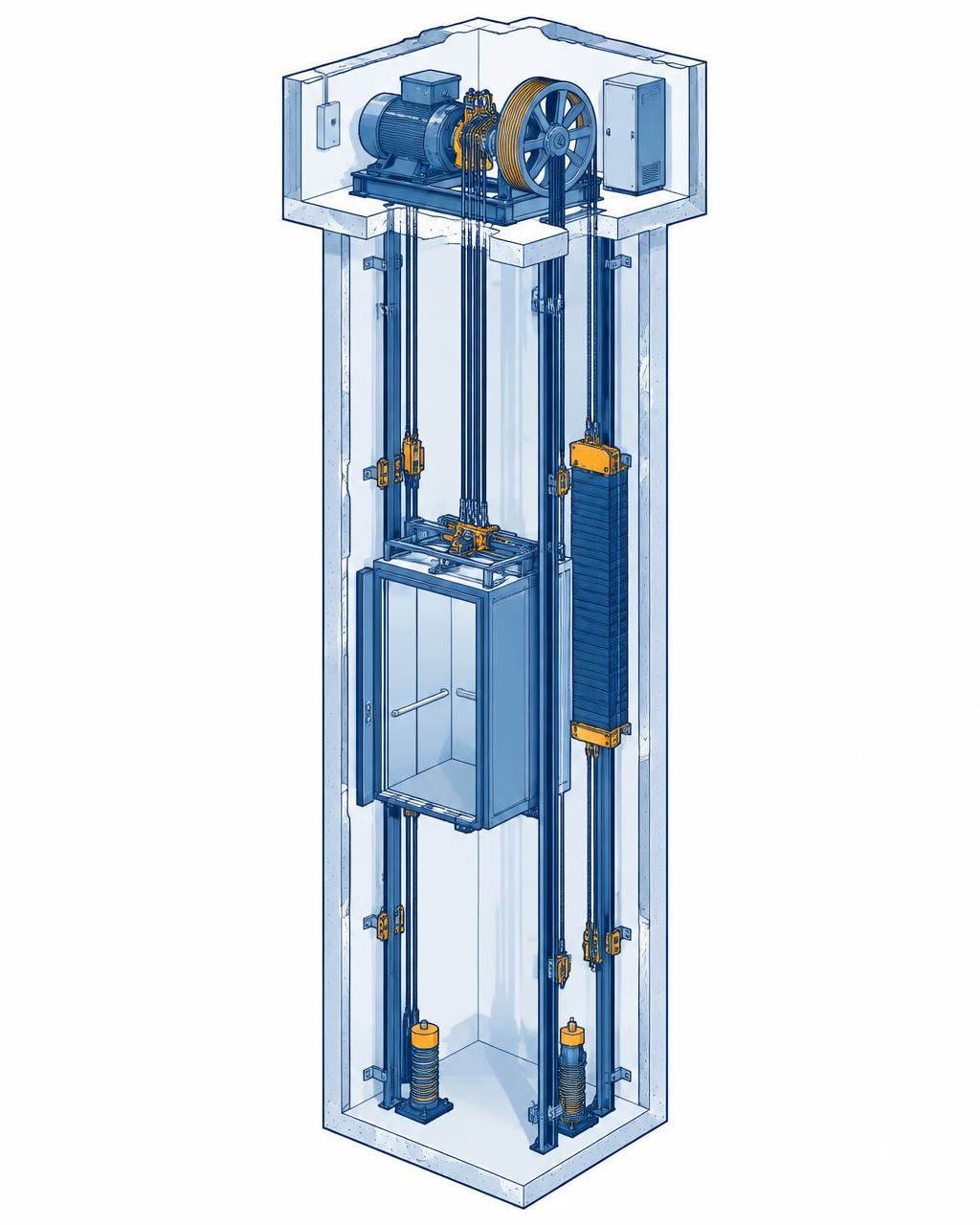
A dumbwaiter is a small, mechanically or electrically powered vertical transport device designed only to carry goods. It is not meant to carry people. Its car is the enclosed box or platform that travels between floors. That car is far smaller than a passenger elevator's, often sized for trays, dishes, linens, files or supplies. Its load rating is much lower than a passenger elevator's. Loading usually happens through a small door at counter or floor height rather than through a walk-in entrance.

That difference matters to an injured person in two ways. First, the hazard is different. When someone reaches into a dumbwaiter, leans into its opening or is struck by its moving car, their body is in a space the equipment was never designed to hold. Second, the legal questions follow the equipment's design. What a property owner, a maintenance company or a manufacturer was expected to guard against depends partly on what the device was built to do and how people foreseeably used it.

The main industry standard for this equipment is ASME A17.1, the Safety Code for Elevators and Escalators. It addresses dumbwaiters separately from passenger elevators. ASME A17.1 is a private code. It gains legal force where a state or a city adopts or references it in its own elevator code, and many do, with their own amendments and timing. The site's page on the ASME A17.1 code explains how that adoption works. Which version applies to a particular dumbwaiter depends on the jurisdiction and on when the equipment was installed or altered. No single state's version is the rule everywhere.

Where Dumbwaiters Are Found and Who Uses Them

Dumbwaiters operate in restaurants and commercial kitchens, in hotels and resorts, and in hospitals and care facilities. They also appear in multi-story private homes, libraries, laundry rooms and retail stockrooms. The people around them are kitchen staff, housekeepers, maintenance workers and technicians, building residents, patients, guests and visitors.

The setting shapes the law. Premises liability is the body of law that governs a property owner's duty of care to people on the property. A restaurant owner, a hotel, a hospital and a homeowner can all owe duties connected to a dumbwaiter on their property. What those duties look like can differ between a commercial building open to the public and a private residence.

Your status on the property is one of the facts courts examine. Many states use these categories:

  • An invitee is someone on the property for the owner's business purpose, such as a customer or a hotel guest.
  • A licensee is someone present with permission for their own purpose, such as a social guest.
  • A trespasser is someone present without permission.

Some states have moved away from these categories toward a single standard of reasonable care. How your status is classified, and what it means, depends on the state.

If you were hurt at work, as a cook, a housekeeper or an aide, workers' compensation law may apply in addition to, or instead of, a civil injury claim against your employer. Those rules differ by state and are not covered on this page. A claim against someone other than the employer, such as a manufacturer or a maintenance contractor, raises the separate questions this page addresses.

How Dumbwaiter Accidents Happen

Dumbwaiter accidents generally fall into a handful of mechanism categories:

  • Cable or rope failure, when the lines that suspend the car wear, fray or break.
  • Brake failure, when the car cannot hold its position or stop as intended.
  • Counterweight problems, when the weight that balances the car is misaligned, detached or malfunctioning.
  • Door and gate entrapment, when a hand, arm or head is caught as a landing door or the car moves.
  • Misleveling, when the car stops at a level above or below the floor landing and leaves a step or gap.
  • Falls into the shaft, when a landing door opens with no car behind it.
  • Electrical faults in the controls, switches or wiring.
  • Overloading beyond what the car was rated to carry.

Many door injuries happen at a shear point, a place where moving and stationary parts come close enough to trap or cut a hand, arm or other body part. The edge of a landing opening, where a moving car passes, is a classic example.

The mechanism matters to someone injured because it points toward who had a duty to prevent it. A frayed cable raises questions about service. A door that opened onto an empty shaft raises questions about its interlock and about how it was designed and maintained. In workplace settings, the federal Occupational Safety and Health Administration (OSHA) has addressed hazards connected to vertical transport equipment.

The cause of any particular accident is a factual question. It is answered from the equipment itself, its records and, in many cases, the analysis of an engineer who examines the lift. The accident does not answer it alone. A lift that injured someone may have failed for a reason no one has yet identified.

Locations Where Dumbwaiter Injuries Occur Most Often

Within a building, dumbwaiter injuries cluster in three places, and each one carries its own hazard.

The landing door or gate is the first. This is where people load and unload. Pinch and shear hazards arise as doors open and close and as the car passes the opening. Injuries here often involve fingers, hands and forearms reaching in at the wrong moment.

The shaft interior is the second. People rarely enter it except for maintenance, inspection or repair. Technicians working in or above the shaft face hazards ordinary users never encounter, including a car that moves while they are in its path. Federal OSHA standards for general industry and construction address hazards to workers in settings like these, including work in confined spaces.

The loading platform or counter area is the third. A person standing at the opening, or reaching across it, can be struck if the car moves unexpectedly or descends faster than it should.

The location of the injury also bears on who controlled that space when it happened. A restaurant may control its kitchen landing. A maintenance contractor may have controlled the shaft during a service visit. A building manager may control access to the machine room. Who controlled what at the time is a factual question, and it is one of the main ways the potential defendants in a case are identified.

Failure Mechanisms: What Can Go Wrong with a Dumbwaiter

Below the general categories sit specific failure modes. These include worn or broken cables, failed safety devices, deteriorated door interlocks, inadequate lubrication, corrosion and faults in the control system.

Three safety devices come up often. A governor is a speed-limiting device that triggers the car's safety brakes if the car moves too fast. A buffer is a device at the bottom of the shaft that absorbs the car's energy if it travels past the lowest landing. A door interlock is a device that keeps the car from moving unless the landing door is fully closed, and it can keep a landing door from opening when no car is there. ASME A17.1 sets requirements for safety devices on this equipment. Whether a device was present, how it was set and whether it worked are facts an engineer examines.

When equipment fails, the law separates two broad kinds of problem. A product defect is something wrong with the equipment as it was made or designed. In general terms, product-liability law describes three kinds:

  • A manufacturing defect is a departure from the intended design in a particular unit, such as a flawed cable or a miswired switch.
  • A design defect is a flaw in the design itself that makes every unit of that model unreasonably dangerous.
  • A failure to warn is the absence of adequate instructions or warnings about a hazard.

A maintenance failure is different. It is something that went wrong in how the equipment was serviced, adjusted, repaired or inspected after it left the factory. A bypassed interlock or a cable left in service too long are examples.

States define and apply these categories in their own ways. For someone injured, the line between them matters because it can determine whether a case points toward the maker of the equipment, the people who maintained it, or both. Whether a failure was a defect, a maintenance lapse or something else is a factual and engineering question that depends on analysis of the specific dumbwaiter. The accident itself does not establish it.

Maintenance and Inspection: What the Records Show and Why They Matter

Dumbwaiters, like passenger elevators, are generally subject to periodic inspection and maintenance under state and local elevator codes. Who inspects, how often and what is checked vary by state and sometimes by city. No one jurisdiction's schedule applies everywhere.

The paperwork usually includes several kinds of records:

  • Inspection certificates, often posted or kept on file.
  • Maintenance logs recording routine service.
  • Repair orders describing specific fixes and replaced parts.
  • Service contracts describing what a maintenance contractor agreed to do.

A maintenance contractor is a company or individual hired to service and repair the equipment under a service agreement.

These records matter because they describe the lift's condition and history before the accident. They can show when a cable was last examined, whether an interlock had been repaired, or whether a recurring complaint was logged. They may be held by the property owner, by the maintenance contractor, or by the local elevator inspection authority.

Inspection and maintenance records remain distinct from allegations or findings of negligence. A record showing that an inspection took place does not by itself establish that the equipment was safe. A gap in the records does not by itself establish that anyone was negligent. Each is one fact among many, read alongside the equipment and the rest of the evidence.

If you are trying to piece this together, the practical questions are what records exist, who holds them, and what steps may preserve them. Those are questions a conversation with an attorney can help sort out.

Injuries Associated with Dumbwaiter Accidents

The mechanisms described above can produce serious harm. Injury categories include:

  • Crush injuries, when a body part is caught between the car and a fixed surface.
  • Degloving injuries and amputations of fingers or hands at shear points.
  • Lacerations from door edges and car frames.
  • Fractures.
  • Traumatic brain injury (TBI), meaning injury to the brain caused by a blow to the head or a sudden movement of it.
  • Spinal cord injury.
  • Death.

The way the accident happened tends to shape the injury. Entrapment at a door often affects the hands and arms. A fall into a shaft or a struck-by event can involve the head and spine.

The severity of an injury affects the categories of damages the law may allow. In general, those categories can include past and future medical expenses, lost income and lost earning capacity, and pain and suffering. They can also include loss of consortium, meaning the harm to a spouse's or family member's relationship with the injured person. Wrongful death is a legal claim brought by surviving family members when a person dies as a result of another party's alleged negligence or wrongful act. Wrongful-death damages are defined by each state's own statute.

Which categories are available, who may bring a claim, whether caps limit any category, and how fault is apportioned all differ from state to state. Each also depends on the facts of what happened. For a family after a death, these rules are often the first legal questions to arise, and they vary considerably across the country.

What Evidence Tends to Matter After a Dumbwaiter Injury

If you were injured, the records that usually matter include the following:

  • The equipment itself, including the car, its doors, cables and safety devices. Engineers examine these to analyze the failure, and their condition after the accident can be central.
  • Photographs and video of the scene, the equipment, any visible damage and the injury. These document conditions at the time.
  • Maintenance and inspection records, which describe the equipment's condition and service history before the accident.
  • Incident and accident reports, which may be filed by the property owner, an employer or a responding authority.
  • Medical records, which document the nature and extent of the injury and its treatment.
  • Witness information, meaning the names and contact details of people who saw the accident or noticed problems with the lift beforehand.
  • Product documentation, including manuals, installation records and warranty documents. These bear on whether the equipment was designed, built and installed as it should have been.

Each category answers a different question. The equipment and records speak to what failed and why. Photos and witnesses speak to what the scene looked like. Medical records speak to the harm.

Evidence can change over time. Equipment is repaired or replaced, logs are updated, and recollections fade. Many injured people and families gather what they can while they are still recovering, often without knowing which pieces will matter. A conversation with our attorney can cover what exists in a dumbwaiter case, who is likely to hold it, and how the records and the equipment fit together.

Who May Be Responsible for a Dumbwaiter Injury

Responsibility in a dumbwaiter case usually falls among several types of party, each under its own legal theory.

  • A property owner or manager may face premises liability, which asks whether they kept the property, including the lift, in a reasonably safe condition for people lawfully on it.
  • A maintenance contractor may face a negligence claim, which asks whether it performed its service and inspection work with reasonable care.
  • An equipment manufacturer may face product liability. That theory asks whether it placed a defective product into the stream of commerce, meaning the chain of distribution from the manufacturer through sellers to the end user. The defect may be a manufacturing defect, a design defect or a failure to warn, as described above.
  • A component manufacturer may face the same product-liability framework, applied to a specific part such as a cable, a door interlock or a control system.
  • An installer may face a negligence claim, which asks whether it installed the equipment in conformance with the applicable codes and the manufacturer's specifications.

Negligence generally asks four things: whether there was a duty, whether it was breached, whether the breach caused the injury, and what damages resulted. Product liability asks whether there was a defect and whether it caused the injury. Whether either is met depends on the facts.

More than one party may be named in a single case, and the facts determine which parties had relevant duties. Comparative fault is a rule used in many states that apportions responsibility among the parties, potentially including the injured person. Depending on the state's version, it may reduce recovery or bar it. A few states follow contributory negligence instead, and rules on joint and several liability, which govern whether one party can be held responsible for another's share, also vary. These cases sit within the broader elevator accident claims the site covers. Escalators are addressed on the site's page on escalator accidents.

Free case evaluation

No Fee Unless We Win Your Case

A free case evaluation is how it starts. Tell us what happened, and we’ll help you understand your options. You pay no fee unless we win your case.

Vertical Transport Injury Counsel

How it works

  1. Request a free case evaluationTell us what happened, in your own words.
  2. Talk through your caseYour options, and what your case may be worth.
  3. No fee unless we winYou pay no attorney fee unless we win your case.
Free case evaluation

Tell Us What Happened

Frequently asked questions

What is a dumbwaiter, and is it the same as an elevator?

No. A dumbwaiter is a small, powered lift designed to carry goods between floors, not people. ASME A17.1 addresses it separately from passenger elevators. Its size, load rating and loading arrangement differ from a passenger elevator's, and those design differences help shape the duties owners, maintainers and manufacturers owed.

Who can be held responsible for a dumbwaiter accident?

That depends on the facts. Potential parties include the property owner or manager, the maintenance contractor, the equipment manufacturer, a component manufacturer and the installer. More than one may be involved. State law governs which claims apply and how fault is divided.

What kinds of injuries do dumbwaiter accidents cause?

They can cause crush injuries, finger or hand amputations at shear points, lacerations, fractures, traumatic brain injuries, spinal injuries and death. The mechanism, whether door entrapment, a shaft fall or unexpected car movement, tends to shape the type and severity of the injury.

Does premises liability or product liability apply to a dumbwaiter injury?

Either or both may apply. Premises liability concerns the owner's or manager's duty to keep the property reasonably safe. Product liability concerns a defect in the dumbwaiter or one of its parts. A maintenance contractor's negligence is a third theory. The facts determine which are relevant.

What records matter after a dumbwaiter accident?

They typically include maintenance and inspection logs, repair orders, service contracts, incident reports, medical records, photos or video, witness information, and installation and product documentation. Together they speak to the equipment's prior condition and what may have failed.

Are dumbwaiters subject to safety inspections?

State and local elevator codes generally provide for periodic inspection of dumbwaiters, but the rules vary by jurisdiction. Inspection records document the service history. They are distinct from any finding of negligence, and their existence or absence is one fact among many.

Can a worker injured by a dumbwaiter bring a personal injury claim?

Workers' compensation rules, which differ by state, may affect what claims a worker can bring against an employer. A separate civil claim against a third party, such as a manufacturer or a maintenance contractor, may be possible depending on the facts and the state's law.

How long does someone have to bring a claim after a dumbwaiter injury?

Limitation periods for injury and wrongful-death claims are set by state law and differ from state to state. When a period starts to run, and which exceptions apply, also vary. The period that governs depends on the statute of the state where the injury occurred.

What is a product defect in the context of a dumbwaiter injury?

It is a flaw in how the equipment was made, designed or labeled. A manufacturing defect departs from the intended design. A design defect affects every unit of a model. A failure to warn involves inadequate instructions or warnings. Whether a defect exists is a factual and engineering question.

Evidence to preserve

  • Any incident or inspection report
  • Photos and names of witnesses
  • The building or property
  • The owner and the maintenance company, if known
  • Hospital and medical records
  • The date it happened

Related topics

ResourceElevator Accident Statistics