
Vertical Transport Injury Counsel

Equipment

Passenger Elevator Accidents: What Injured Riders and Families Need to Know

Last updated

Free Case Evaluation
Short answer

How passenger elevator accidents happen, from misleveling to door and drop failures, who may be responsible by type, and why records, claim elements and deadlines differ by state.

On this page
  1. If You Were Hurt in a Passenger Elevator: How the Law Treats It
  2. How Passenger Elevator Accidents Happen
  3. Where Passenger Elevator Accidents Occur
  4. What Went Wrong With Your Elevator, and Why It Shapes Whom a Claim Names
  5. The Elevator's Records: Who Holds Them and What They Don't Decide
  6. Injuries Common in Passenger Elevator Accidents
  7. Evidence That Often Matters After a Passenger Elevator Accident
  8. Who May Be Responsible for a Passenger Elevator Accident
  9. What Your Passenger Elevator Injury Claim Has to Show
  10. Filing Deadlines and Why They Differ by State
  11. Frequently asked questions

If you were hurt in a passenger elevator, the key question is usually who controlled the equipment that failed. A passenger elevator accident can involve the building owner, a property manager, the company that maintained the elevator, or the company that made or installed it. Which may be responsible depends on what went wrong, what the records show and the state's law.

Most people facing this are dealing with something that happened in a few seconds: a car that stopped a few inches below the floor, doors that closed on a shoulder or a walker, a drop that ended with a jolt, or an hour spent stuck between floors. Afterward come the emergency room, the missed shifts, and the bills, and often a building manager who says little. For a family after a death, the questions are heavier and the answers seem further away. This page explains how passenger elevator accidents happen, where, what fails, what the records do and do not decide, and who may be responsible by type.

If You Were Hurt in a Passenger Elevator: How the Law Treats It

If you were riding a passenger elevator, you were in a mechanically driven car designed to carry people between the floors of a building. That sets it apart from a freight elevator, built to move goods; a service elevator, used mainly by staff and for deliveries; and a construction elevator, a temporary hoist used while a building goes up. The distinction matters because people who ride a passenger elevator are members of the public with no control over the machine and no way to see its condition.

Two legal frameworks usually come into play. Premises liability holds a property owner or operator responsible for failing to keep the property reasonably safe for the people who use it. Product liability holds a manufacturer, and in some states a seller or installer, responsible for injuries caused by a defective product. Some elevator cases rest on one, some on the other, and some on both, depending on the facts and the state.

A third idea appears in some states. A common carrier is a business that carries the public, and some states have treated the operator of a passenger elevator like one, which can mean a higher duty of care than ordinary premises law asks. That treatment varies by state.

For someone who was hurt, the framework that fits shapes whom a claim may name and what it has to show. A first question worth raising with an attorney is which of these theories the facts point toward in the state where the accident happened. The broader picture across elevators and escalators appears on the site's elevator accident lawyer page.

How Passenger Elevator Accidents Happen

Misleveling is the most common way a ride turns into a fall. Misleveling means the car stops with its floor not flush with the building floor, leaving a step up or a step down at the threshold. A rider looking ahead, carrying bags or using a cane or wheelchair can catch a toe or miss the drop entirely. Closely related are leveling failures that happen as a person enters or exits, when the car shifts after the doors open.

Door failures are the second large group. Doors can close on a person before they clear the threshold, or the sensor meant to make them reopen can fail to detect a body, a hand or a mobility device. Doors can also fail to open at all.

Some accidents involve the car's movement itself. A sudden drop or uncontrolled descent, sometimes followed by an abrupt stop, can throw riders against the walls or floor. A true free fall is rare; the site's page on elevator sudden drops explains the difference. Mechanical or electrical failures can also stop a car without warning.

Then there is entrapment, meaning passengers are confined inside a stalled car between floors. Even without a physical injury, entrapment can be frightening, and attempts to climb out can lead to falls.

The mechanism matters for a practical reason. A misleveling problem may point toward maintenance and adjustment; a door sensor failure may raise questions about both upkeep and design. Describing what happened says nothing, on its own, about why it happened in a particular car. Many people write down exactly what the car or doors did while the memory is fresh, since that account helps show which parties and records may be relevant.

Where Passenger Elevator Accidents Occur

Passenger elevators run in almost every kind of building people use: hotels, apartment and condominium buildings, office buildings, hospitals and medical facilities, shopping malls and retail centers, airports and transit hubs, and parking structures. The property type tends to be one of the first facts that shapes who may be responsible.

Each setting carries its own ownership and use. A hotel elevator moves guests who may be unfamiliar with the building, often carrying luggage. A hospital elevator carries patients on stretchers, people recovering from surgery, and visitors under strain. An apartment elevator is used daily by the same residents, which can matter when people complain about a problem before anyone is hurt. An airport or transit elevator may sit on property owned by a public authority, which can bring different procedures into a claim, as the deadlines section below explains.

Multi-tenant buildings add layers. An office tower or a mall may involve a building owner, a separate property management company, and a maintenance contractor servicing the elevators under its own contract.

If you were hurt, who owned and ran the building is often less obvious than it seems. The answer usually comes from deeds, leases and service contracts rather than the name on the front door. What is at stake is naming the right parties, and, for public property, following a separate procedure. Noting the building's name, address and the elevator's location gives an attorney a starting point for tracing ownership and control.

What Went Wrong With Your Elevator, and Why It Shapes Whom a Claim Names

Behind each accident type sits a physical or systemic failure, and the one involved helps decide whom a claim may be directed against. If your car misleveled, dropped or closed on you, it likely traces to one of these:

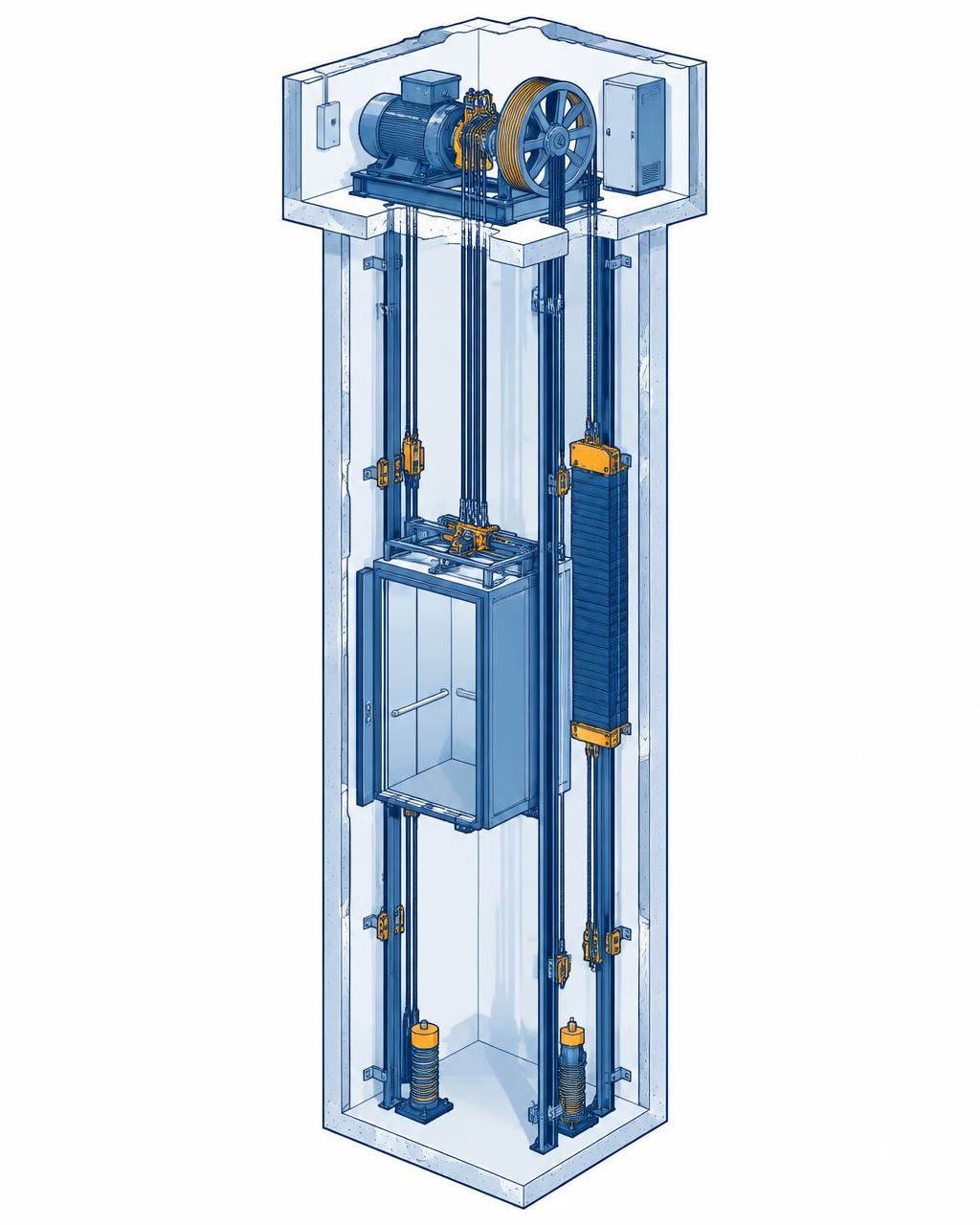
  • Wear or failure in cables and hoisting equipment in a traction elevator, the kind raised and lowered by cables over a motor-driven sheave.
  • Defects or wear in door sensors and the closing mechanism, affecting whether doors detect a person and reopen.
  • Control system and electrical failures, which can affect where the car stops, how it accelerates and whether it stops abruptly.
  • Hydraulic system failures in a hydraulic elevator, one that uses a fluid-driven piston rather than cables, often in low-rise buildings.
  • Deferred or inadequate maintenance, where needed service, adjustment or part replacement was put off.
  • Failure to act on a known problem, such as repeated reports that a car was stopping out of level.

Worn parts left in service or ignored complaints usually raise premises-liability questions about the owner's or operator's duty to maintain. A component flawed from the factory, or installed wrongly, raises product-liability questions about the manufacturer or installer. Many cases involve some of each, and this is where the practical risk lies for an injured rider: a claim aimed only at the building owner may leave out a manufacturer or contractor whose part or work caused the failure, and, as discussed below, a party missed at the start can be hard to add later.

Safety codes also come into these discussions. The site's page on the ASME A17.1 code explains how a private safety code gains legal force only where a state adopts it, which is why what a code requires is a state-by-state question.

A question worth bringing to an attorney is which failure the known facts suggest, and what investigation of the equipment could confirm it.

The Elevator's Records: Who Holds Them and What They Don't Decide

The records that may explain your accident usually come from two different kinds of oversight. One is inspection by a government authority; whether an elevator must be inspected, how often and by whom is set by state or local law, and those rules differ from place to place. The other is service: building owners commonly hire a maintenance contractor, a company that services and repairs the equipment under a contract with the owner.

The records each produces are separate. Inspection records document what was examined and when, and what the inspector noted. Maintenance logs document work performed: routine service, adjustments, callbacks after a complaint, parts replaced. Neither is a finding of negligence. An inspection record does not by itself establish that an elevator was safe on the day of an accident, and a gap or an unaddressed note in a log does not by itself establish that anyone was negligent. Whether records support a claim turns on the facts and governing law, not the records alone.

These records can sit in several places at once. The building owner may keep service contracts and complaint files; the maintenance contractor may hold work tickets and callback history; a state or local inspection agency may hold inspection reports and any certificate it issued.

For an injured rider or a family, the stake is that the records most likely to show what went wrong are in someone else's hands, and the injured person has no control over how long they are kept. A complaint file or a callback history that is not located early may be harder to find once the building changes managers or contractors. A conversation with an attorney can cover what kinds of records may exist for a particular building and the ways they are typically obtained.

Injuries Common in Passenger Elevator Accidents

The injury often follows the mechanism. A trip or fall on a misleveled threshold can cause fractures, commonly of the hip, wrist or ankle, along with head and soft-tissue injuries. Doors that close on a person can cause crush injuries and, in the most serious cases, amputations. Sudden drops and abrupt stops can cause spinal and back injuries, traumatic brain injury and fractures. Entrapment can leave psychological harm that lasts well after the doors open. And some passenger elevator accidents are fatal.

For someone recovering, the injury is the center of daily life: the surgeries, the therapy, the weeks without a paycheck. In the law, the injury also shapes the categories of damages that may be allowed, which commonly include medical expenses, lost income, and pain and suffering. When a person dies, the damages a family may seek, and who may bring the claim, are set by the wrongful-death statute of the state where it happened, and those statutes differ. Damages rules for injury claims differ by state as well.

One element runs through every case: causation, the link between the accident and the injury. Medical records, from the first emergency visit through follow-up care, bear on that link because they record when symptoms appeared and how providers described them. Many people keep bills, treatment records and a note of missed work as they go, so the full effect of the injury can be reviewed with an attorney. Government injury data for elevators is collected on the site's elevator accident statistics page.

Evidence That Often Matters After a Passenger Elevator Accident

If you were hurt, the records that usually matter fall into a few groups: some made by the building, some by the equipment, and some by the people involved.

  • The incident report filed with the building or property manager, often the only written account made on the day.
  • Surveillance video from a camera in the cab or in the lobby.
  • Maintenance logs and inspection records for that particular car.
  • Records from the elevator's controller or data logger, the electronic system that can store fault codes and events.
  • Photographs of the threshold, the cab, the doors and the injury itself.
  • Medical records and treatment history.
  • The names and contact information of witnesses.
  • Any prior complaints or notices about the elevator's condition, from residents, tenants, staff or guests.

Timing matters with some of these. Video systems and electronic logs can record over older material, depending on how a system is set up, and an incident report may be the only contemporaneous record. Injured people and families often note the elevator's number or location, keep photos they took on their phones, and write down who was nearby while memories are fresh.

Much of this evidence is held by others, which is why so many people feel stuck at this stage. If you are trying to understand what exists and how it can be kept, you can request a case evaluation to talk through the records involved in what happened to you.

Who May Be Responsible for a Passenger Elevator Accident

Responsibility in these cases is often shared, and it tracks who controlled what. Each party's role carries its own duty:

  • The building owner, which owes a duty to keep the premises, including its elevators, reasonably safe.
  • A property management company, where one runs the building on the owner's behalf.
  • The elevator maintenance contractor, which owes a duty to perform its service and repair work competently.
  • The elevator manufacturer, where a design or manufacturing defect is claimed to have caused the failure.
  • The installer, where improper installation is claimed to have contributed.
  • A component or parts manufacturer, where a single part such as a sensor or control board is at issue.

Premises liability generally applies to owners and operators, product liability to manufacturers and, in some states, sellers and installers, and a maintenance contractor's responsibility is usually framed as negligence in the work it performed. More than one party may bear some responsibility, on different theories.

Whether any party is legally responsible rests on the facts and the state's law; contracts between the owner and the contractor, and who knew about a problem, often matter. For someone who was hurt, the stake is that a party missed at the start can be hard to add later. Identifying everyone who had a hand in the elevator's ownership, operation, service or design is something a conversation with an attorney can help sort out.

What Your Passenger Elevator Injury Claim Has to Show

A negligence or premises-liability claim generally has four elements. Duty is the legal obligation to act with reasonable care toward the injured person. Breach means that obligation was not met, for example through a failure to maintain or repair. Causation means the breach actually caused the injury. Damages means the person suffered real harm the law recognizes. In states that treat elevator operators as common carriers, the duty owed may be higher than ordinary care, but that varies by state.

A product-liability claim asks different questions. It requires a defect, which may be a design defect (the design itself was unreasonably dangerous), a manufacturing defect (the unit departed from its intended design) or a failure to warn (inadequate instructions or warnings about a hazard). It also requires causation and damages. An accident does not by itself prove a defect, and an injury does not by itself prove anyone's fault.

The injured person's own conduct can matter too. Comparative fault rules, which may reduce a claim or bar it when the injured person is found partly at fault, differ by state. A rider who was hurried or looking at a phone may worry that this ends the matter; how much it counts, if at all, turns on the state's rule and the facts.

For an injured rider or a family, these elements are the test every piece of evidence is measured against, which is why the records above carry so much weight. Questions worth raising with an attorney include which elements the known facts already support and which still depend on records held by others.

Filing Deadlines and Why They Differ by State

Every state sets its own time limit for filing a personal-injury or wrongful-death lawsuit, called a statute of limitations, and those limits differ from state to state. No single period is the rule everywhere. As one illustration of how much the rules vary, the site's California elevator accident page sets out that state's rules separately; they are California's alone.

The period typically begins on the date of the injury or the death, but states recognize exceptions. A discovery rule may delay the start when the injury or its cause was not immediately apparent. Tolling for minors may pause the clock for a child who was hurt. States have other exceptions of their own as well.

Claims involving a government-owned building or a public authority, such as a public hospital, a transit station or an airport run by a public agency, may require a formal notice before any lawsuit, on a shorter timetable than the ordinary limitation period. Those requirements, too, differ by state and by the public body involved.

The stakes are simple to state: missing the applicable deadline typically bars the claim entirely, no matter how strong the facts are. For a family still in the hospital or planning a funeral, that can feel like one more burden. Because the periods vary and the exceptions depend on specific facts, the deadline that applies is one of the most time-sensitive questions to discuss with an attorney. This page does not set out any one state's deadline.

Free case evaluation

No Fee Unless We Win Your Case

A free case evaluation is how it starts. Tell us what happened, and we’ll help you understand your options. You pay no fee unless we win your case.

Vertical Transport Injury Counsel

How it works

  1. Request a free case evaluationTell us what happened, in your own words.
  2. Talk through your caseYour options, and what your case may be worth.
  3. No fee unless we winYou pay no attorney fee unless we win your case.
Free case evaluation

Tell Us What Happened

Frequently asked questions

What causes most passenger elevator accidents?

The main causes include misleveling, door sensor failures, cable or hoisting problems, hydraulic system problems, control system faults and deferred maintenance. The cause in any specific accident depends on what an investigation of the equipment and its records shows, not on the type of accident alone.

Who can be held responsible for a passenger elevator accident?

The parties who may be involved include the building owner, a property management company, the maintenance contractor, the manufacturer, the installer and component makers. More than one may bear responsibility, and which ones are involved depends on the facts and the applicable state's law.

What is misleveling in an elevator, and why is it dangerous?

Misleveling means the car stops with its floor not flush with the building floor, leaving a raised or lowered threshold. That step creates a trip-and-fall hazard on entry or exit, particularly for older adults and people with mobility limitations who may not see or clear it.

What should someone do after being hurt in a passenger elevator accident?

Injured people often report the incident to the building, get medical care, note the elevator's number and location, and keep photos and witness names. A conversation with an attorney can cover which records may exist and how they are typically preserved.

Does a passenger elevator accident always involve a defective elevator?

No. An accident may stem from a maintenance failure, an owner's failure to act on a known problem, a manufacturing or design defect, or a combination. An accident does not by itself establish a defect or anyone's fault; that depends on what the investigation shows.

What is the difference between premises liability and product liability in an elevator accident case?

Premises liability concerns an owner's or operator's failure to keep property reasonably safe. Product liability concerns a defective product, and applies to manufacturers and, in some states, sellers or installers. Both can apply in one case; which applies depends on the facts and the state's law.

What is the time limit for filing a lawsuit after a passenger elevator accident?

The time limit is set by each state's law and differs by state. It typically starts on the date of injury or death, with exceptions such as the discovery rule, tolling for minors and special notice rules for government entities. Missing it typically bars the claim.

Can a family file a claim if someone died in a passenger elevator accident?

In most states, yes, through a wrongful-death claim. Each state's wrongful-death statute sets who may bring the claim and which damages categories are available, and those statutes differ. Whether a claim exists depends on the facts and that state's law.

Are elevator accidents covered by workers' compensation if they happen at work?

Workers' compensation may apply when an employee is hurt in the course of employment. Depending on the state's law, a separate claim against a third party, such as a building owner or manufacturer, may also be possible. How the two interact is fact- and state-specific.

What records are most important after a passenger elevator accident?

The key categories are the building's incident report, cab and lobby video, maintenance and inspection records, controller logs, medical records and witness information. Video and electronic logs can be recorded over, and much of this is held by others rather than the injured person.

Evidence to preserve

  • Any incident or inspection report
  • Photos and names of witnesses
  • The building or property
  • The owner and the maintenance company, if known
  • Hospital and medical records
  • The date it happened

Related topics

ResourceElevator Accident Statistics